Case study
The Wright Books
Priced in public.
An Exeter accountancy practice with a website that answers the question almost no practice will put in writing: what does this cost? Launched in August, rebuilt and doubled in October, and still growing.
- Services
- Web Design · Copywriting · Local SEO
- Sector
- Accountancy & Bookkeeping
- Location
- Exeter, Devon
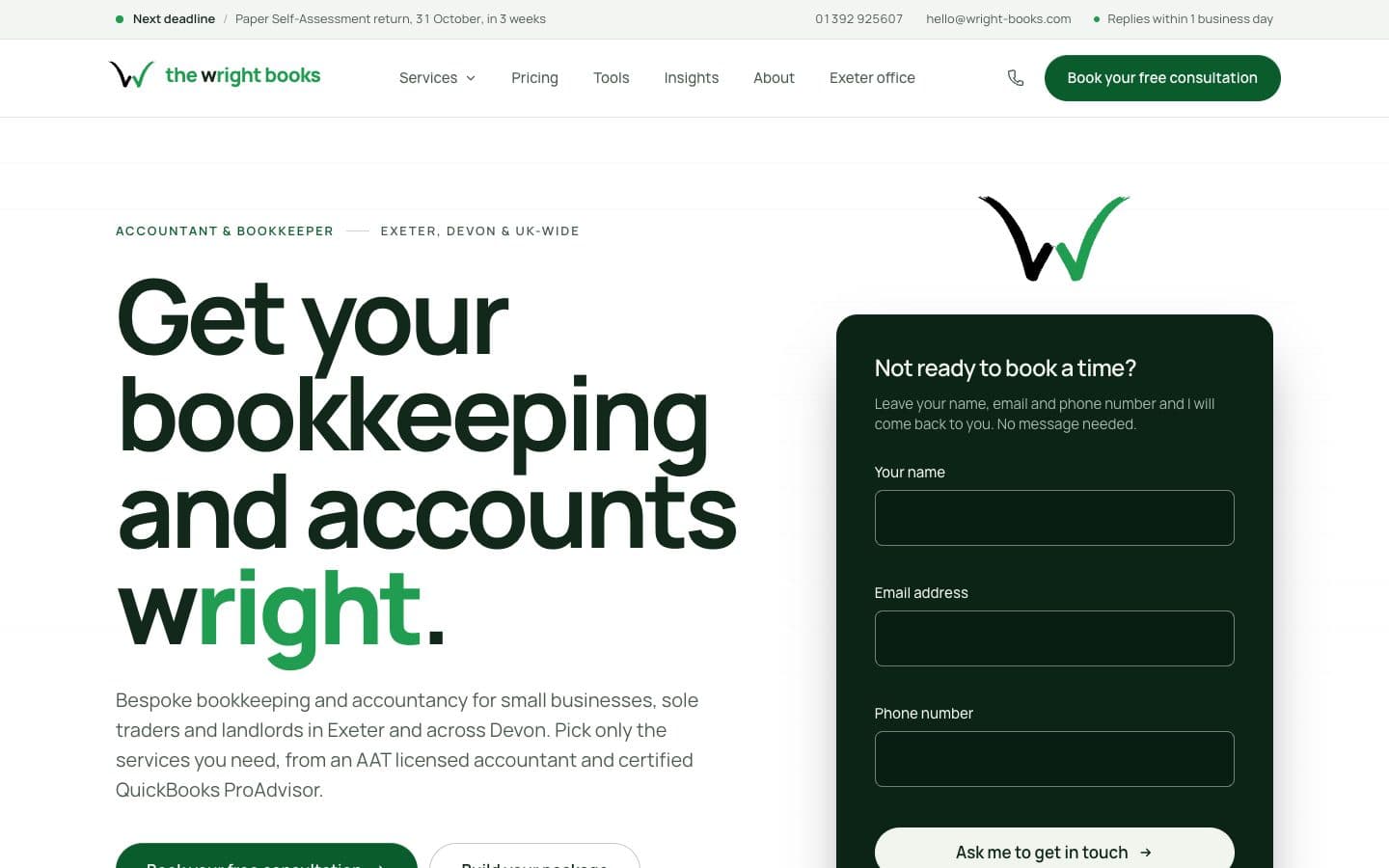
Lewis’s W is two ticks, one black and one green, and the tick turns up all the way down his site.
The brief
A practice that publishes its prices.
The Wright Books is Lewis Wright’s bookkeeping and accountancy practice on The Quay in Exeter, for small businesses, sole traders and landlords. He came to us with a Squarespace site he had built himself. It was not ranking and it was not bringing in work.
The brief was one job: collect enquiries. That meant answering, in public, the two things every prospect wants to know. What will this cost, and how hard is it to move?
Time to the main content
Before:19.5sNow:
1.8s
The Squarespace site, then today's homepage on a phone
Mobile speed score
Before:49Now:
99
PageSpeed Insights, out of 100
Homepage weight
Before:3,073 KBNow:
324 KB
Everything a phone downloads to show it
Requests to load it
Before:154Now:
25
Fewer round trips, so it is quicker on a weak signal
Pages
Before:17Now:
34
The August launch, then the October rebuild
Free tools
Before:0Now:
4
Plus a tax calendar people can subscribe to
An ever-growing site
Launched in August. Doubled by October. Still growing.
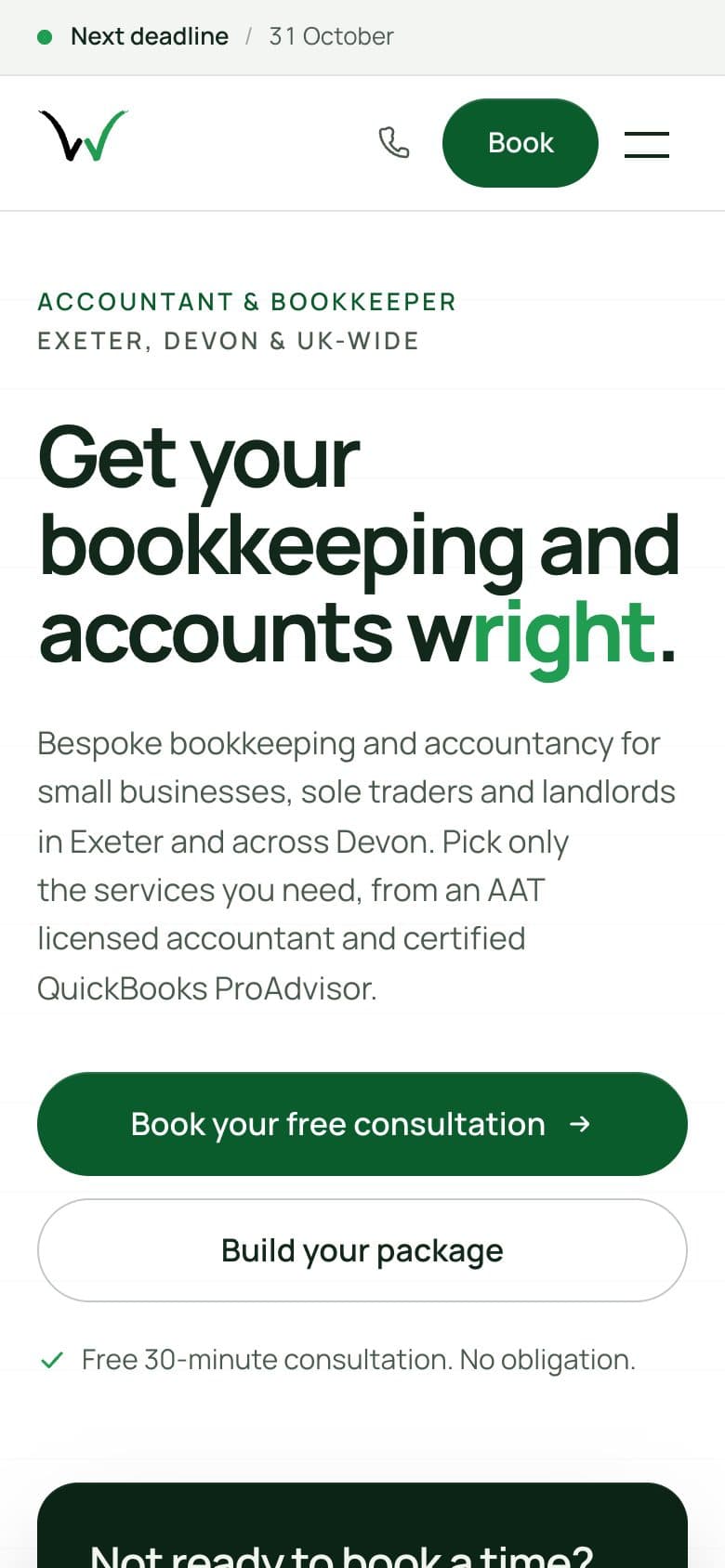
A website is not finished at launch. This one went live at the end of August, was rebuilt and doubled about six weeks later, and is reported on every month.
Before
Squarespace, built by Lewis
- Not ranking, no enquiries
- 19.5 seconds to the main content
- 154 requests and 3 MB for one page
31 August 2026
The first build
wright-books.com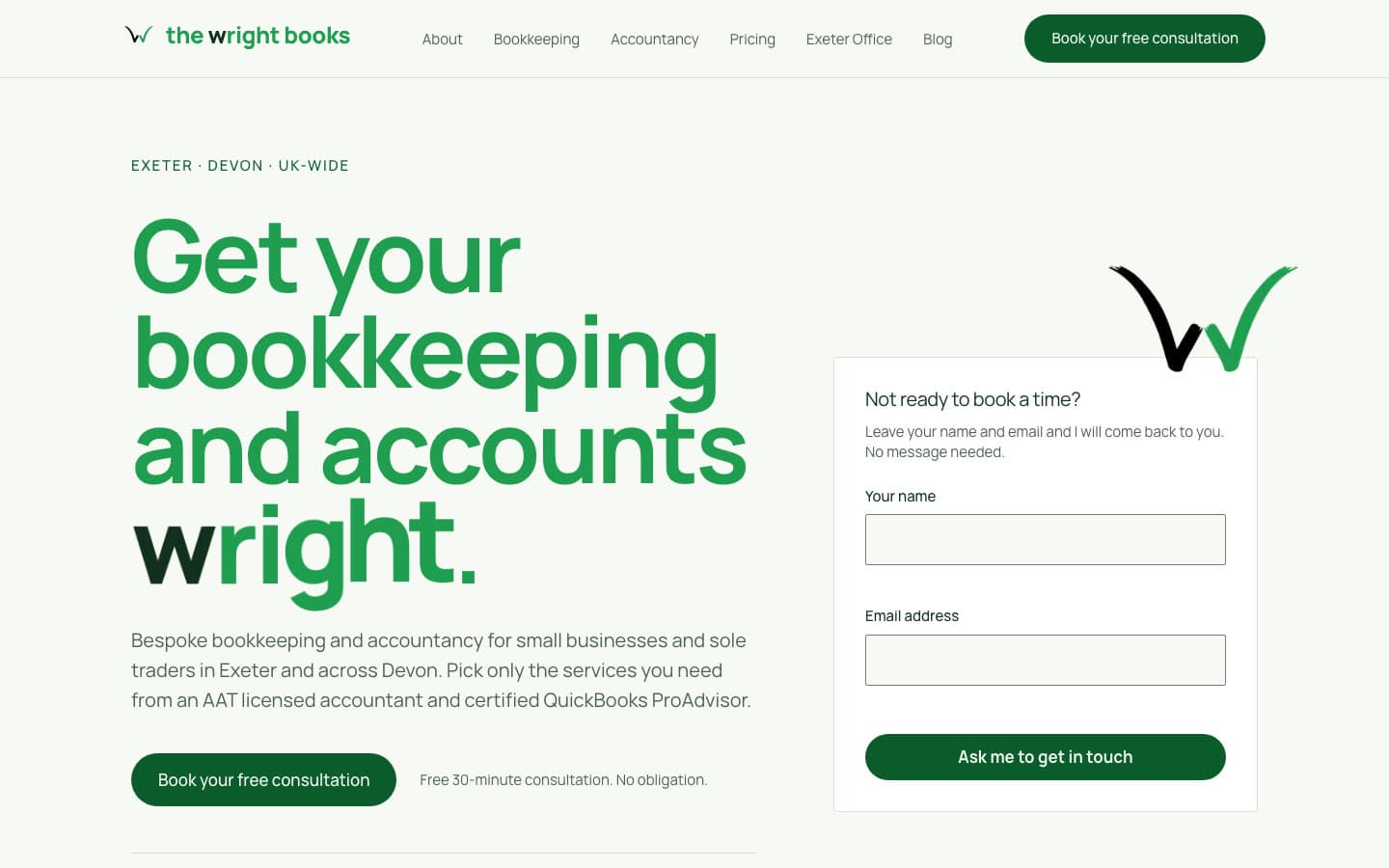
- 17 pages, every price published
- A pricing page you build yourself
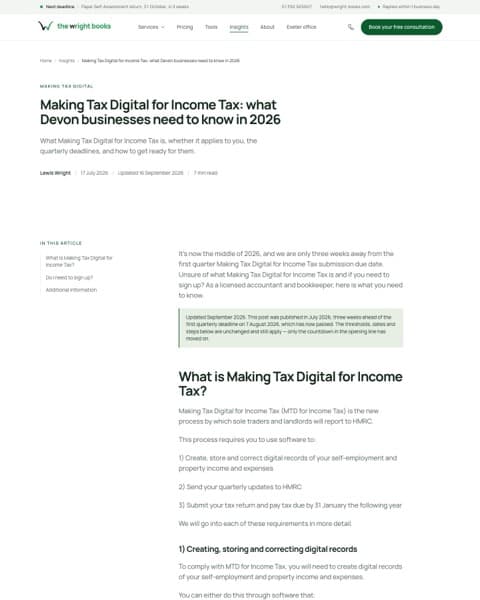
- Switching and Making Tax Digital pages
9 October 2026
The rebuild
wright-books.com- 34 pages, eight of them services
- Four free tools and a tax calendar
- The package builder on the homepage
Every month
What comes next
- A report on the 1st of every month
- Changes as the practice grows
The system
Lewis’s brand, set properly.
He came with a logo, a green and a typeface. The system makes them work across thirty-four pages without one of them looking like a template.
- ForestThe boxes: forms, totals, tool results
- Wright greenThe W, the ticks, the figures
- InkEvery word
- WhiteEvery section
- MistAlternate bands, for rhythm
Colour
White sections, with the forest green kept for the boxes. That was Lewis's call after the first preview, and it was the right one.
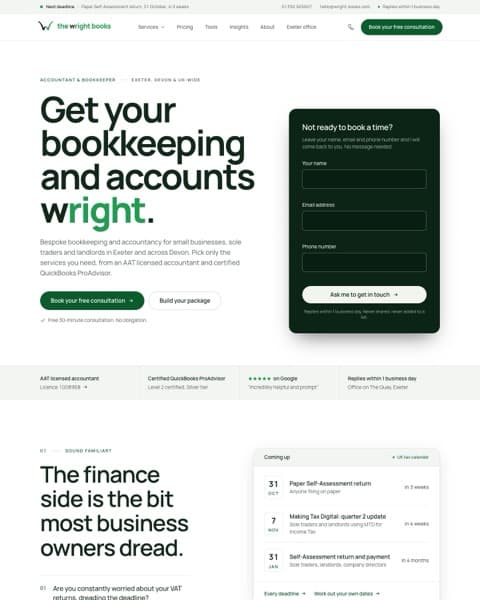
Get your bookkeeping and accounts wright.
Type
Manrope, his brand typeface, set heavy and tight for headlines and calm for reading.
The mark
Two ticks: wright, and right. The tick is the motif the whole site is built on.
- Sales ledger
- Purchase ledger
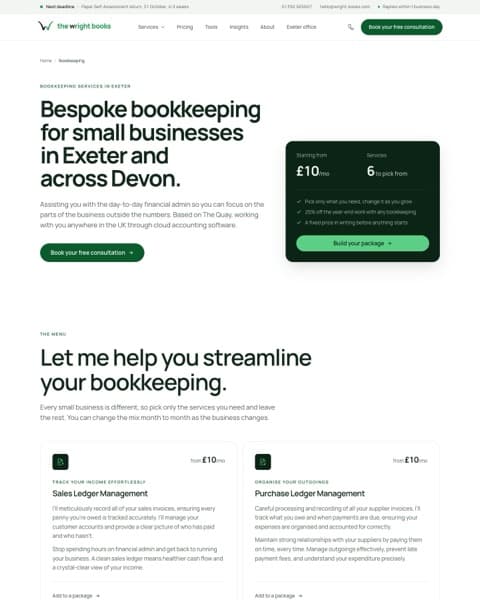
- Bank reconciliation
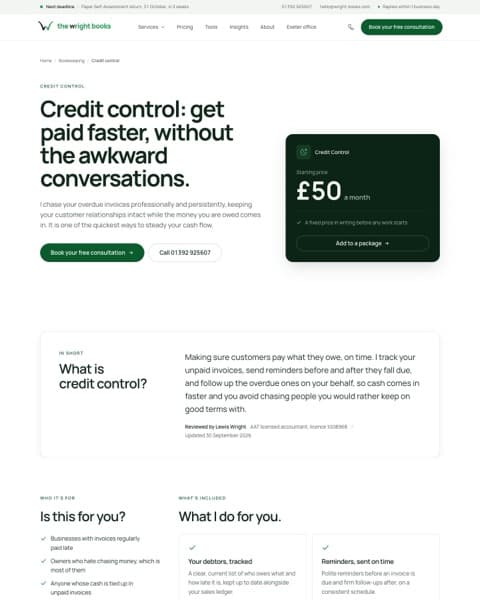
- Credit control
- Payroll
- Accounting software
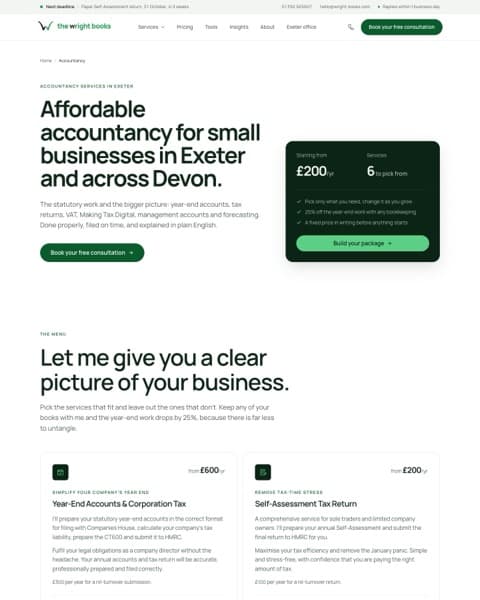
- Year-end accounts
- Self-Assessment
- Management accounts
- Cash flow forecasting
- VAT returns
- Making Tax Digital
- Sole traders
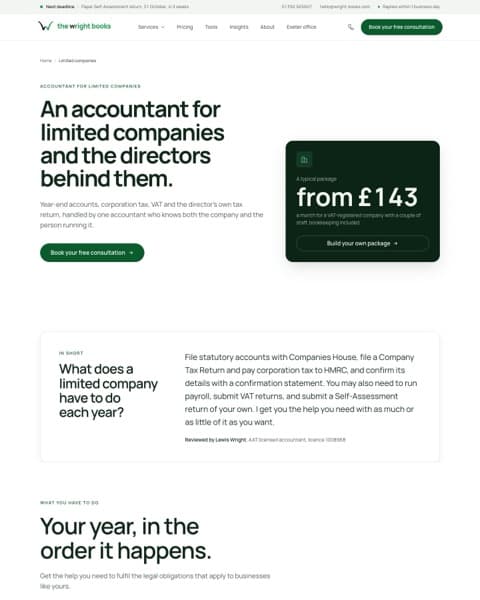
- Limited companies
- Landlords
- Switching accountants
Icons
16 line icons drawn for the site, one family, so nothing looks borrowed.
- Bank Reconciliation
- £25/mo
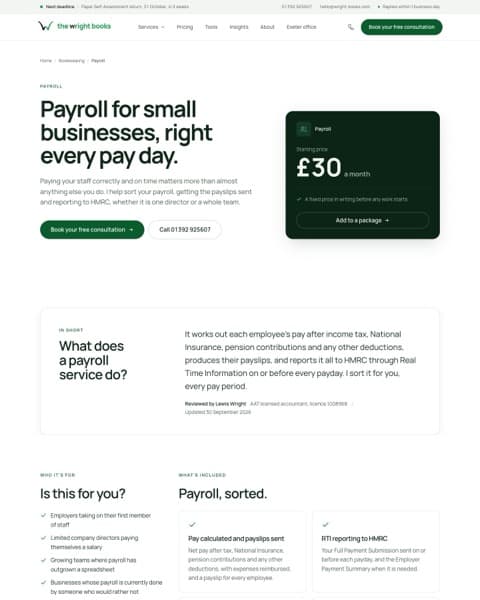
- Payroll
- £30/mo
- MTD VAT Returns
- £90/qtr
- Year-End Accounts
- £600/yr
Figures
Every price in tabular figures, so the numbers line up like a ledger.
The homepage
The whole homepage, top to bottom.




Priced in public
Tick what you need. Watch it add up.
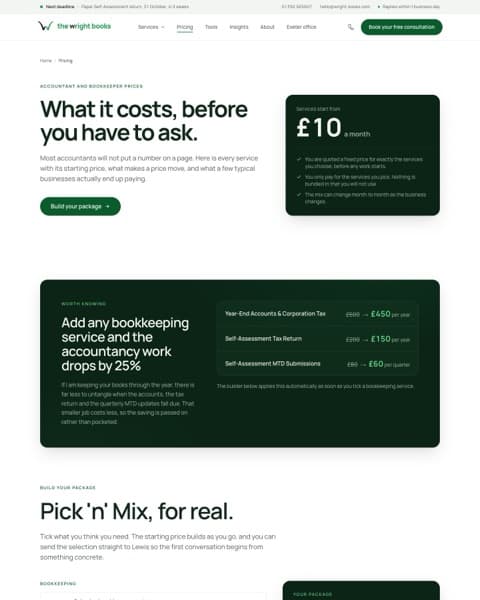
Most practices will not put a number on their website. Lewis publishes a starting price for every service, and the homepage lets you build a package: tick a service and it joins the ledger, grouped by what happens every month, quarter and year, with the monthly total underneath.
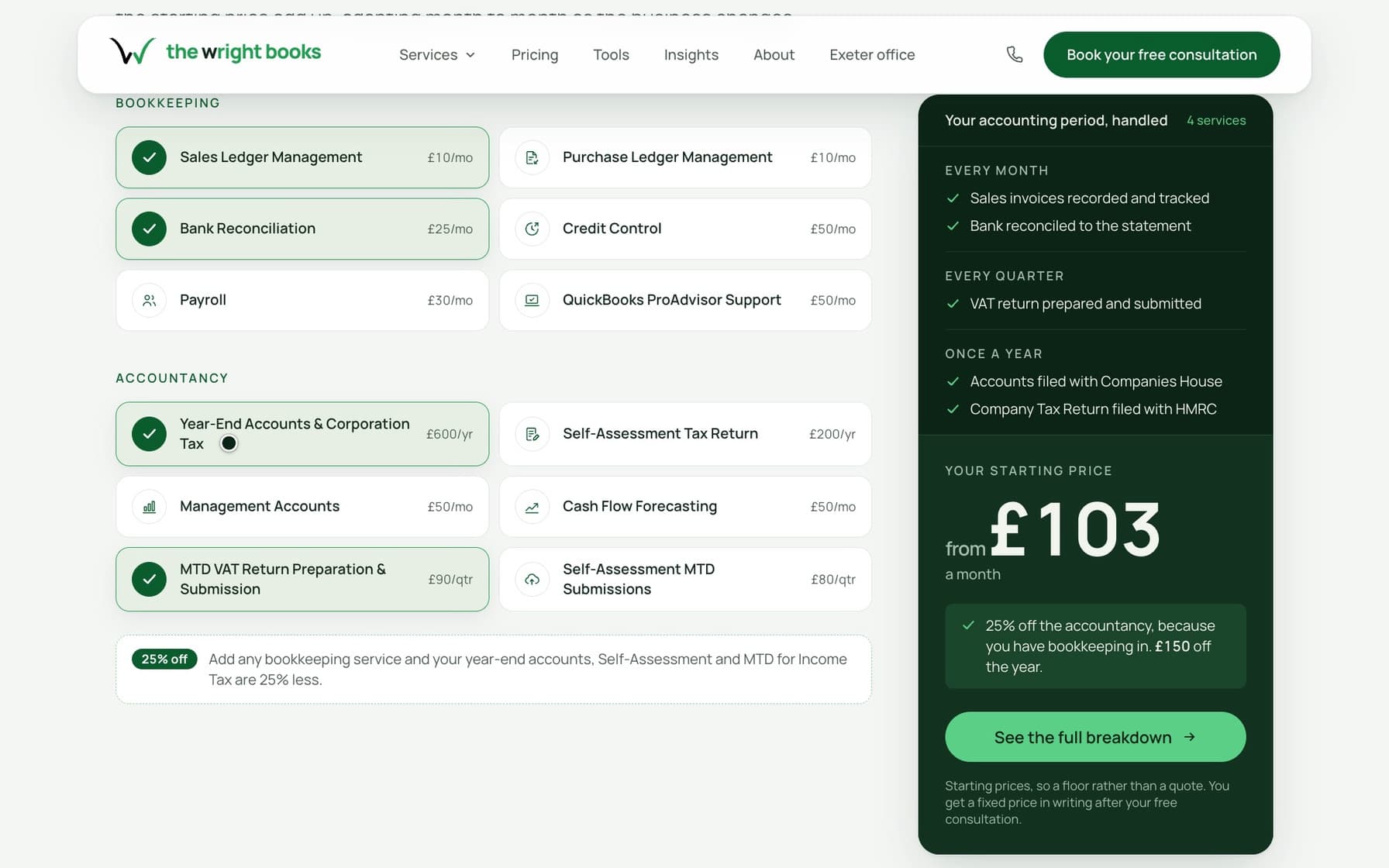
Recorded on wright-books.com.
Free tools
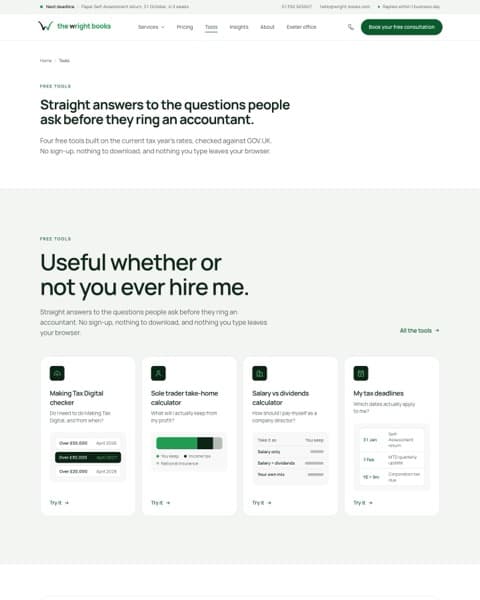
Four tools that bring people in early.
Calculators people search for long before they need an accountant, each one checked by Lewis before it went live.
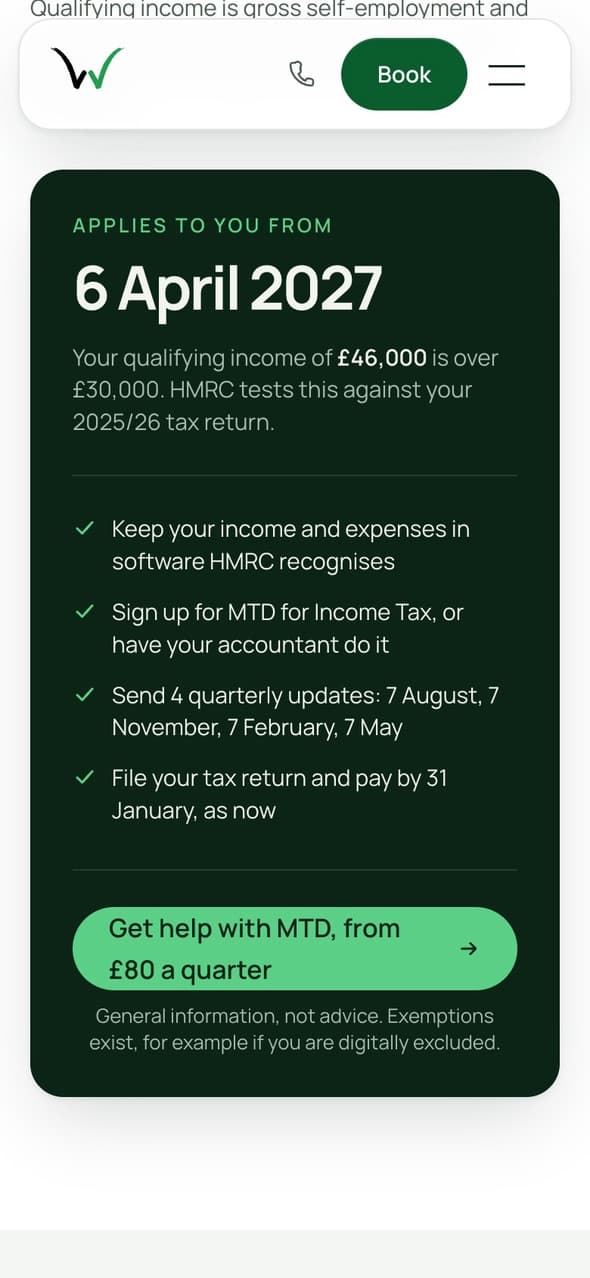
Making Tax Digital checker
Tick how you earn, enter the income, and it tells you when MTD applies to you.
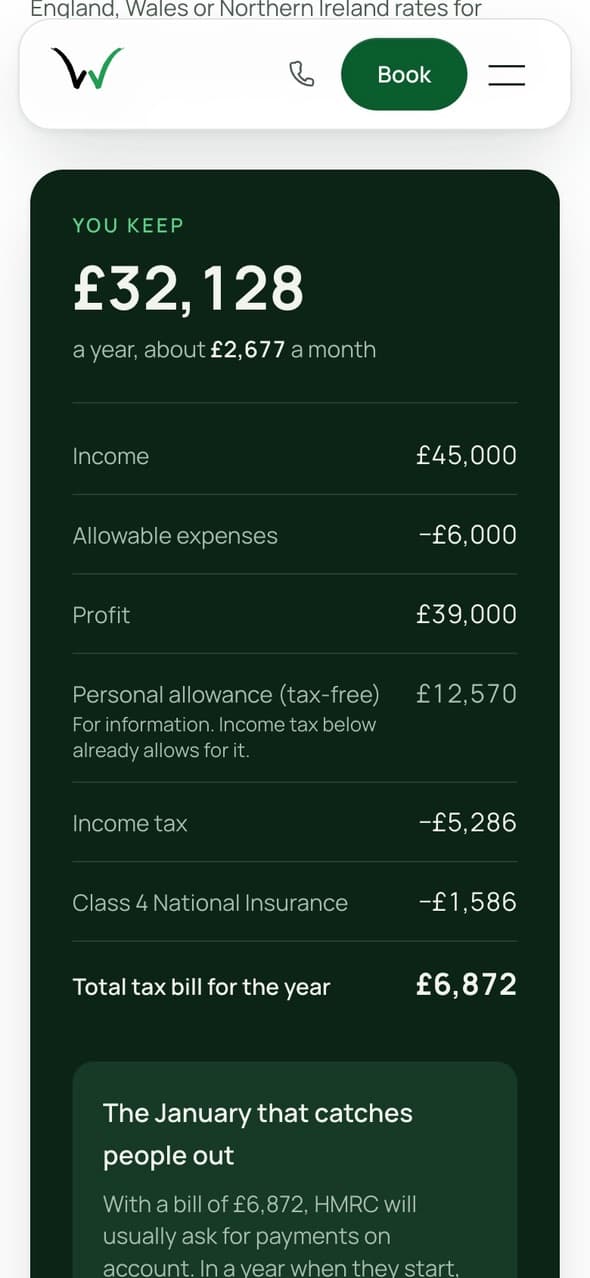
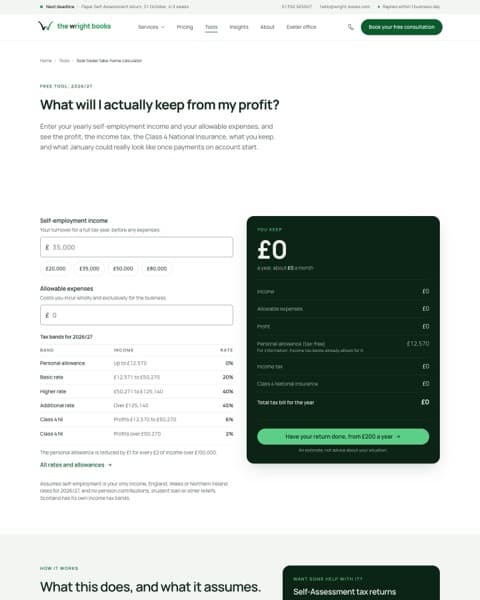
Sole trader take-home
Income and expenses in, take-home pay out, with the tax bands shown.
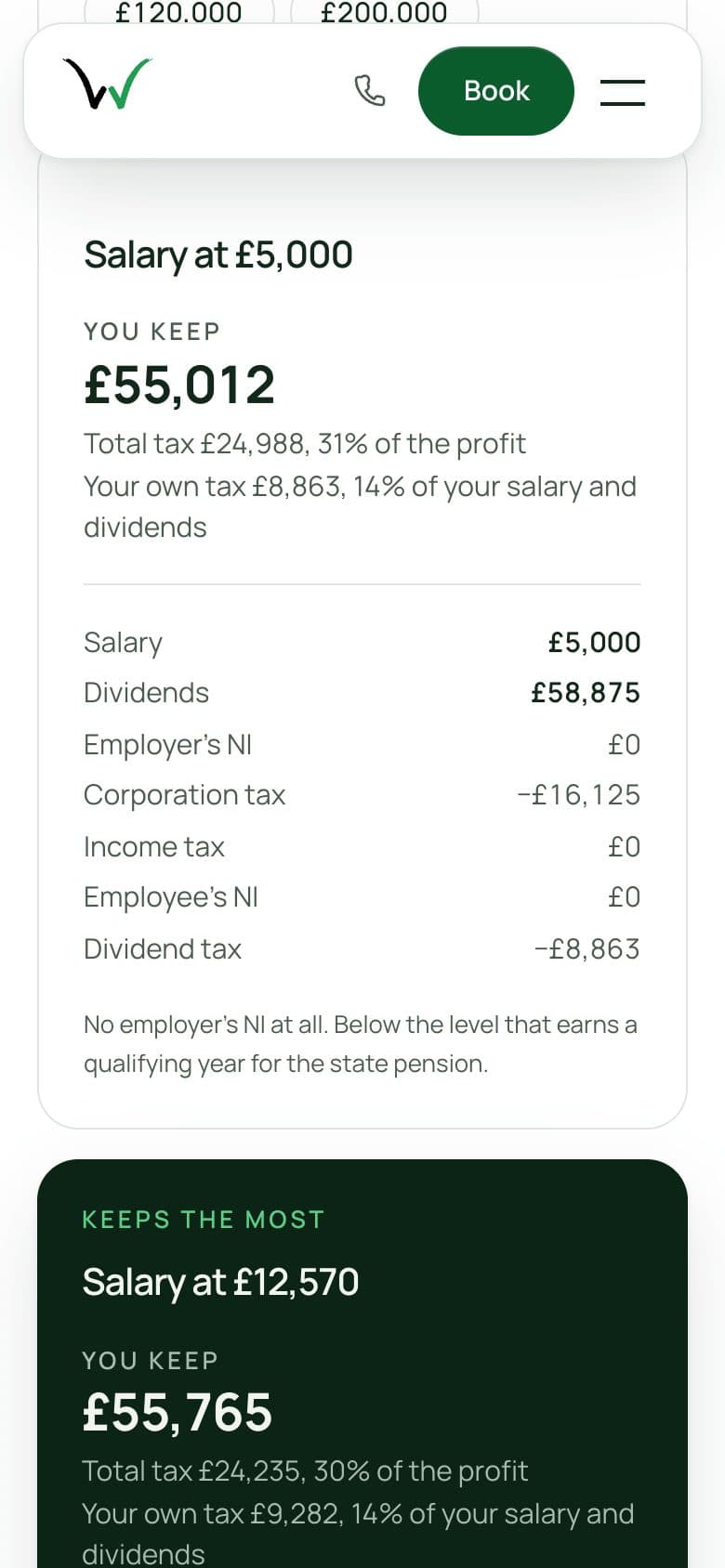
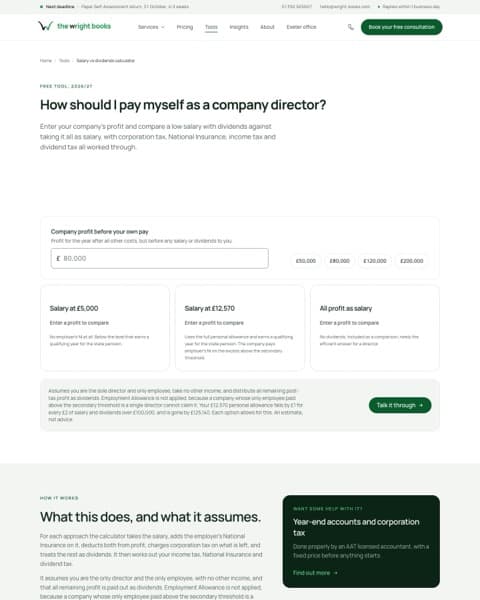
Salary vs dividends
For company directors: the ways to pay yourself, compared side by side.
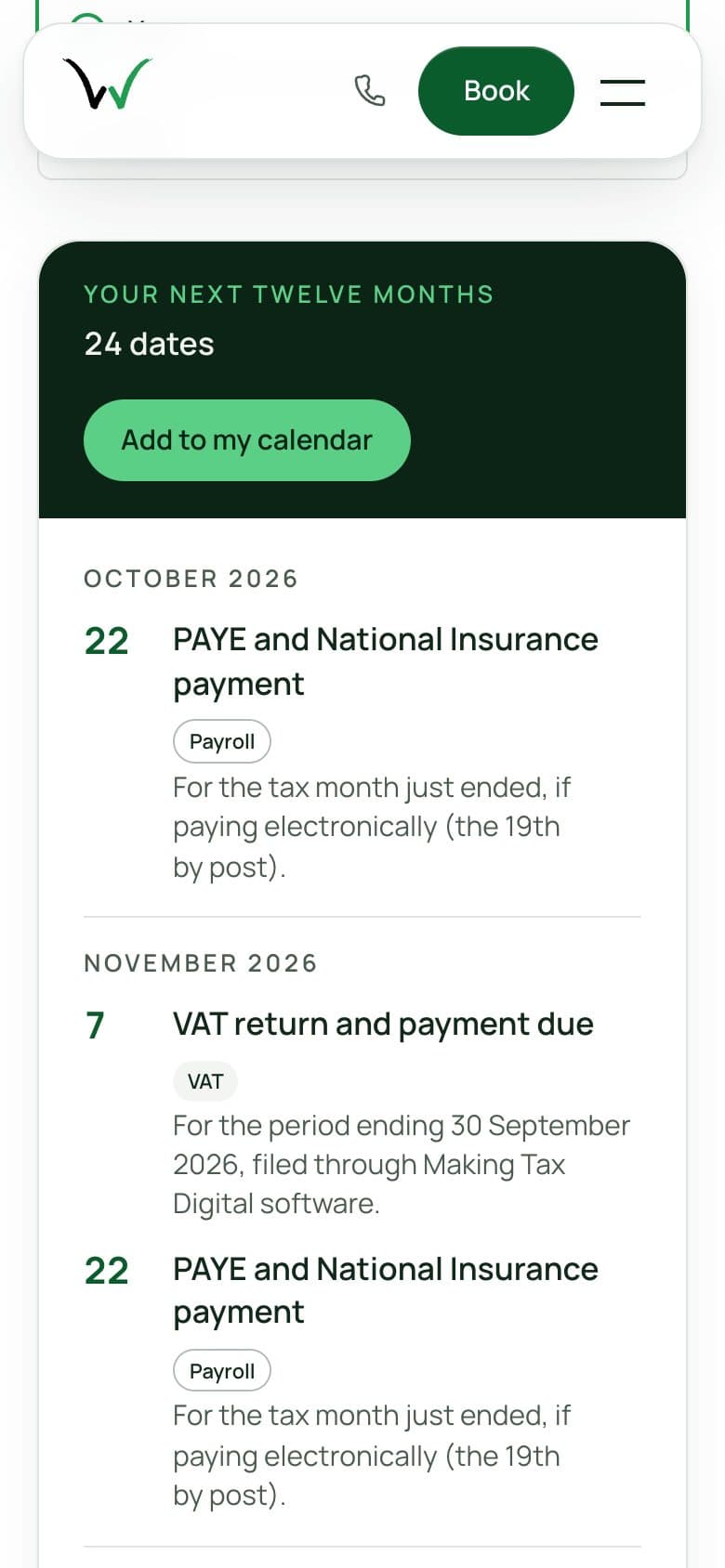
My tax deadlines
A few answers about the business, and its own list of dates.
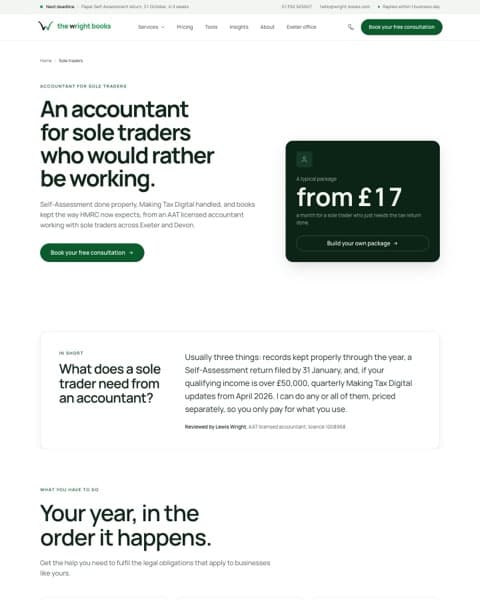
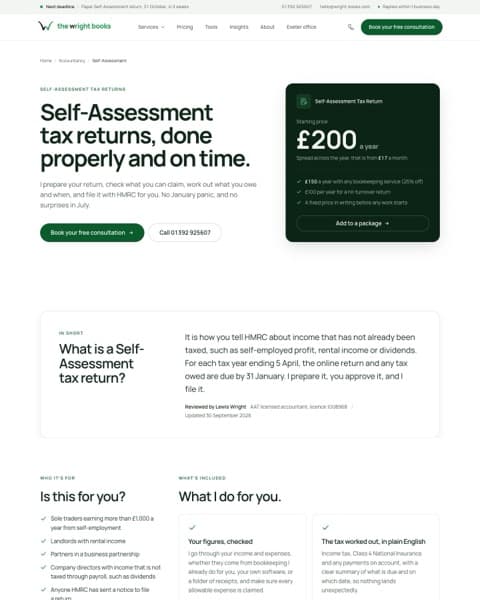
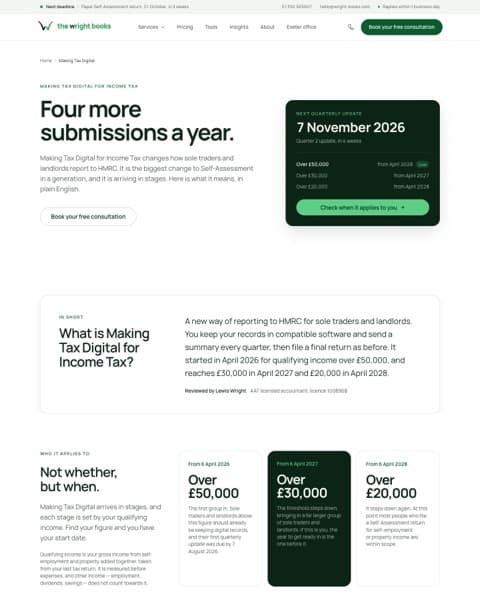
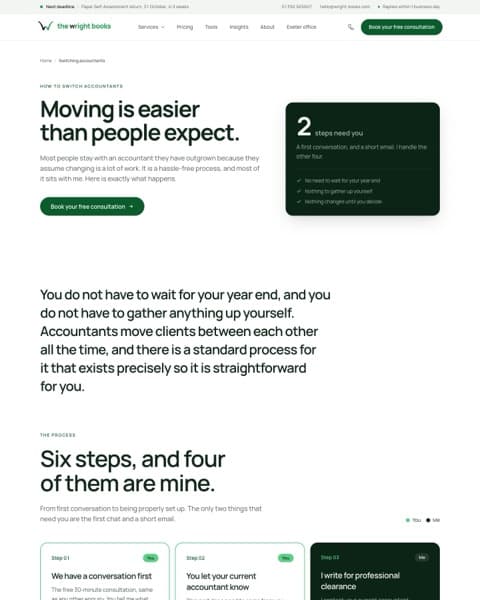
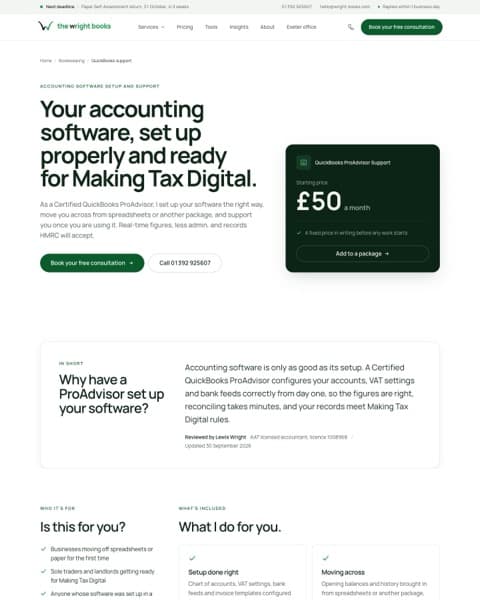
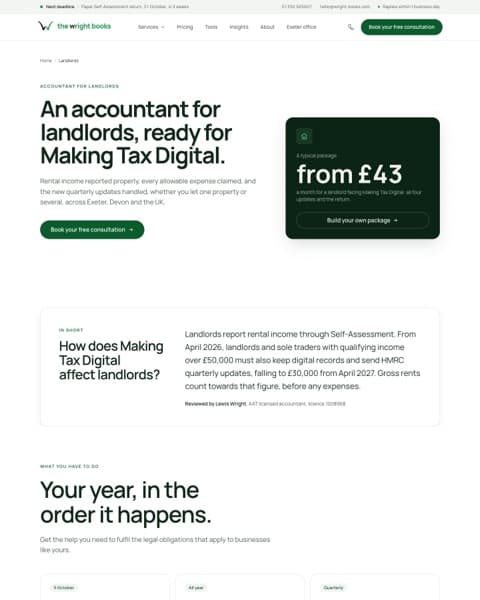
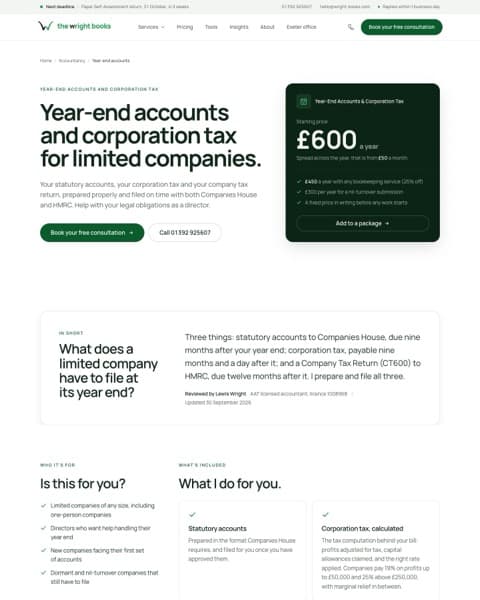
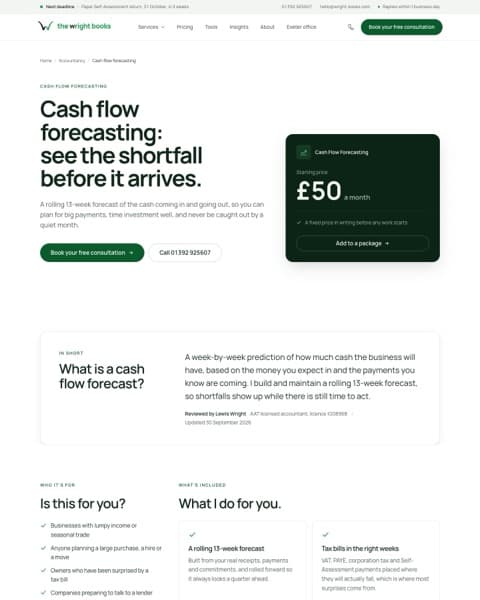
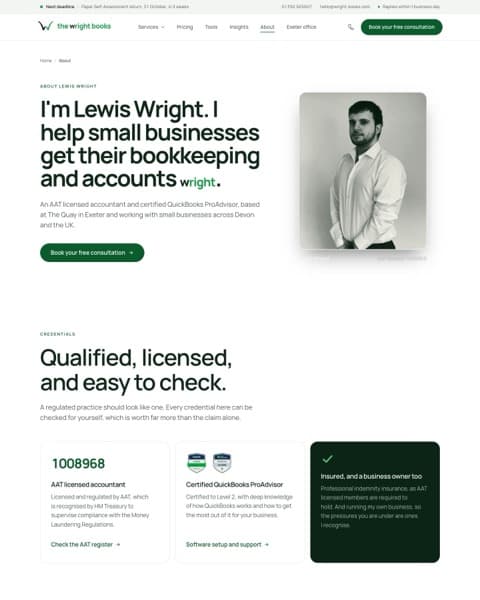
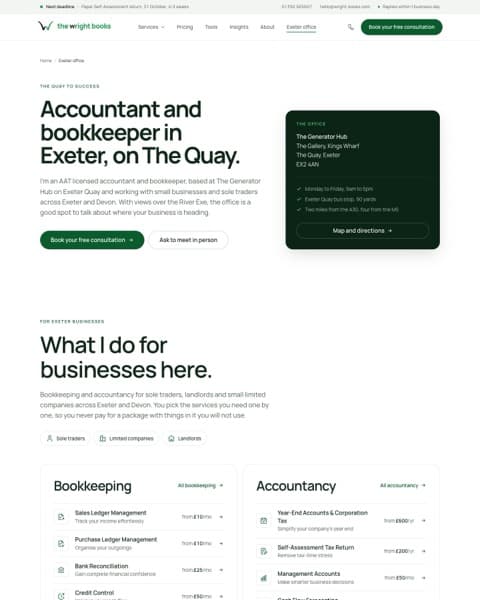
34 pages
Every page answers a different search.
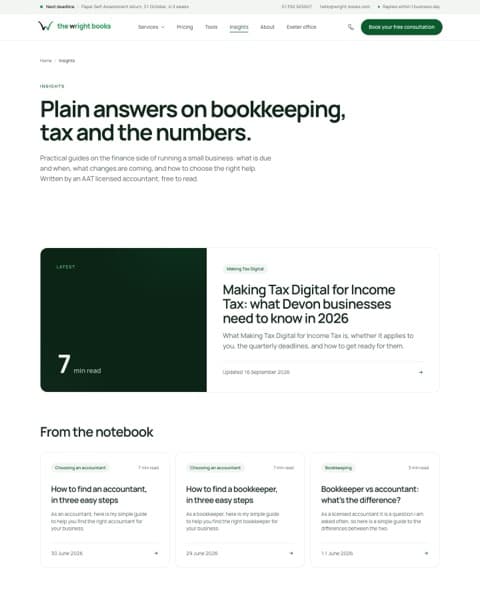
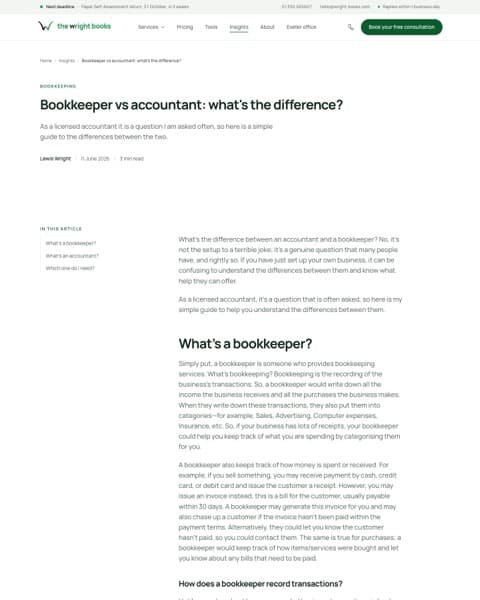
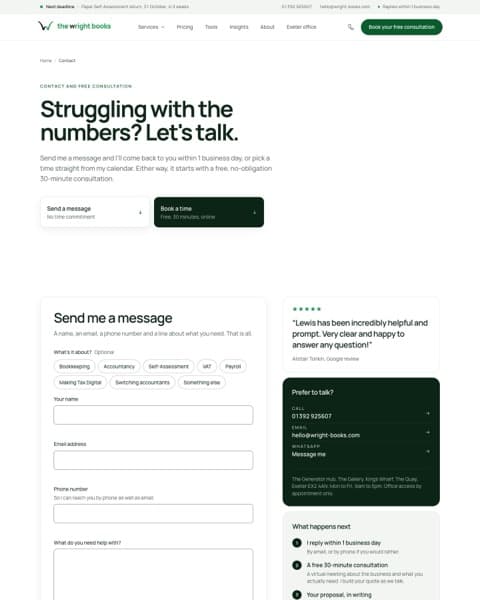
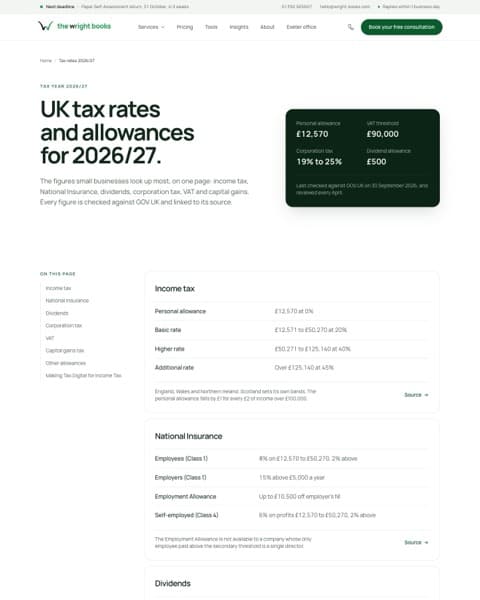
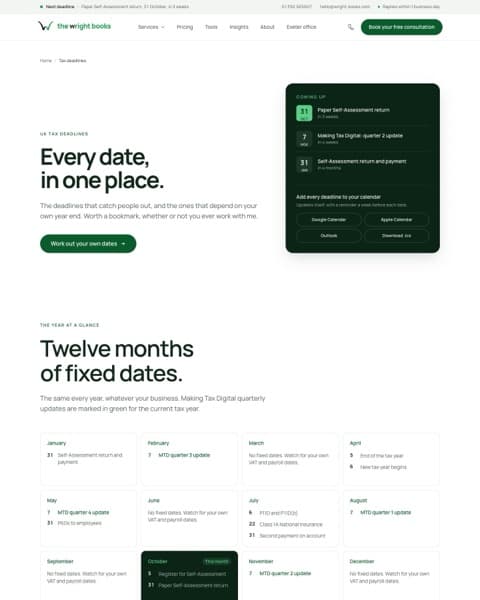
Eight service pages, three for sole traders, limited companies and landlords, four tools, the guides and the Insights. In August there were seventeen.
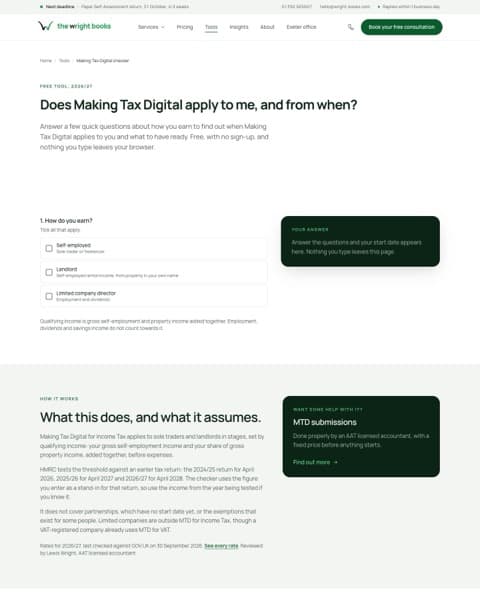
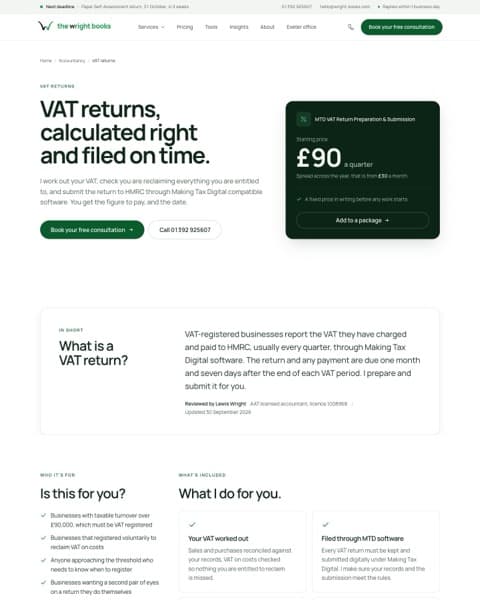
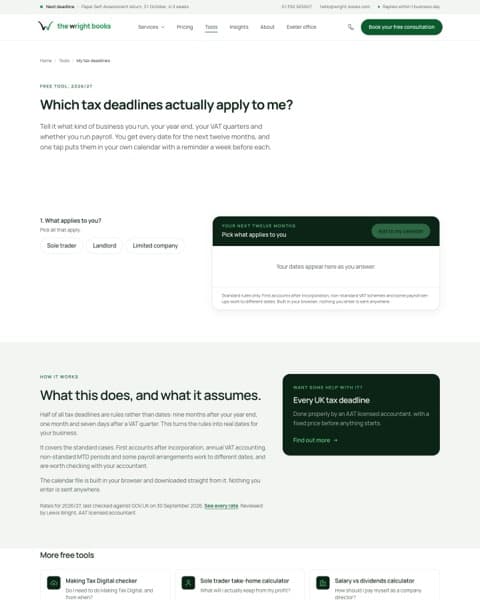
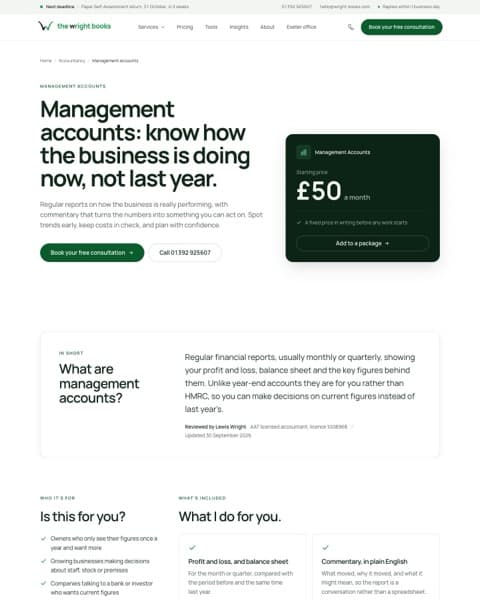
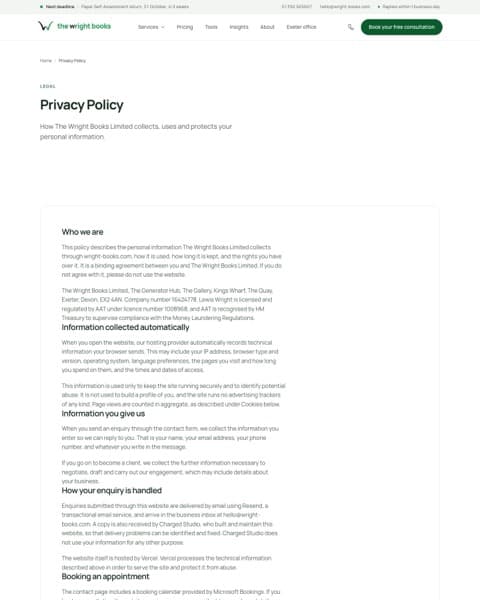
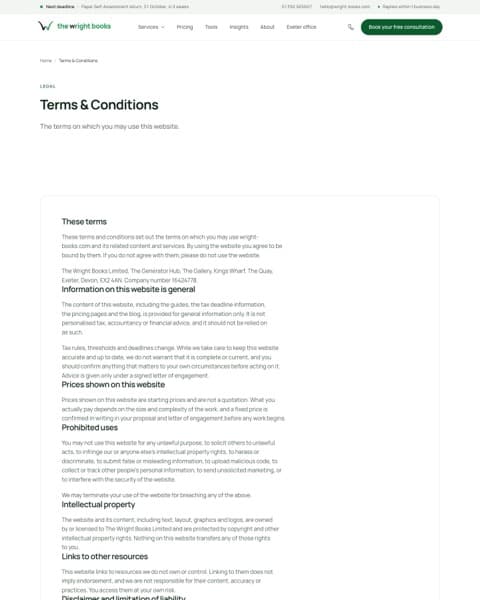
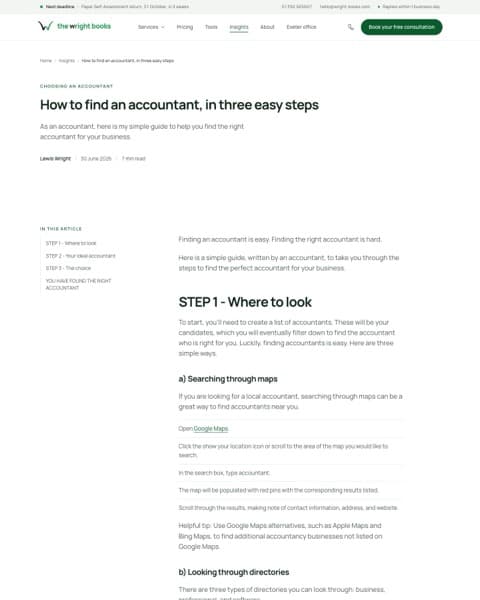
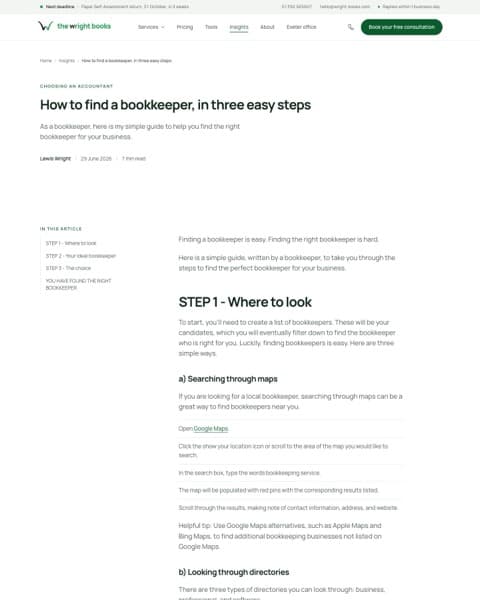
Checked before launch
Lewis went through every page and every tool on a private preview before any of it went live. Tax content goes out under his AAT licence, so nothing launched until he had signed off the figures.
Built light
Measured with PageSpeed Insights on 13 October 2026, the homepage scores 99 for performance on mobile and 100 for accessibility, best practices and SEO, with the main content on screen in 1.8 seconds. On desktop it scores 100 on all four.
- 99Performance
- 100Accessibility
- 100Best practices
- 100SEO
Where it stands
The rebuilt site went live on 9 October, so there is no ranking or enquiry data worth quoting yet, and we are not going to invent one. It is measured on the 1st of every month, and when there is a real number it will appear here.
If you run a practice and want the same treatment, the thinking behind this build is set out in full on our page for accountancy practices.
Next project
Dynamic SW Cleaning
Commercial first, on purpose.
Read the case study
Every enquiry, straight to the right person.
Tell us what your business does and what isn't working. In a free 15-minute consultation we'll show you what we'd fix first.